30+ years
CNC Machining
Great diversity
materials available
Own
measuring room
One-of-a-kind items
Welcome
Harderwijk
in the center of the Netherlands
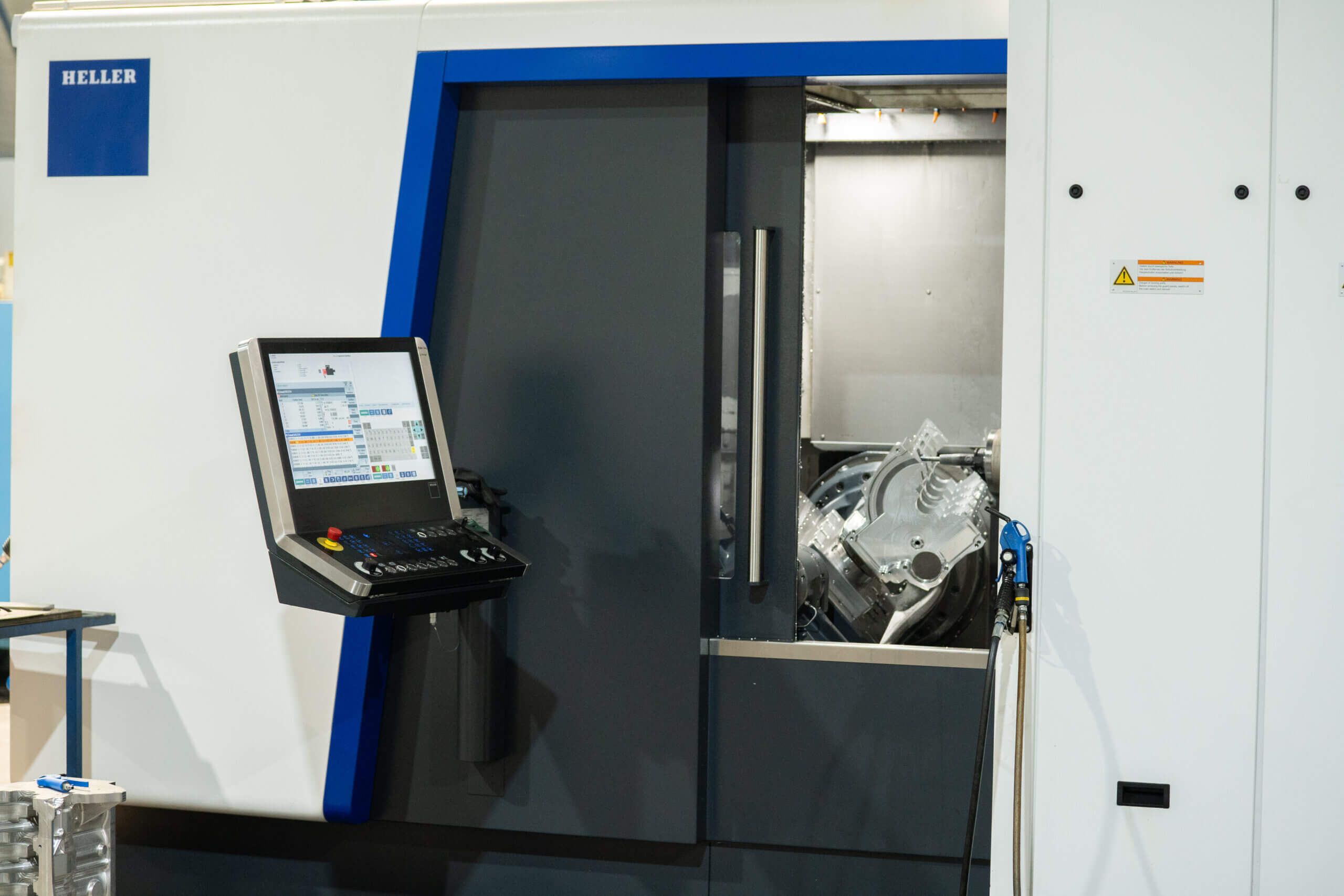
WHAT IS 5-AXIS MILLING?
In 5-axis milling, the milling tool can move in five directions: three linear axes (X, Y, Z) and two rotational axes. This allows the tool to reach surfaces and contours that are inaccessible with 3-axis milling. The workpiece needs to be re-clamped less often, which improves accuracy and reduces cycle time.
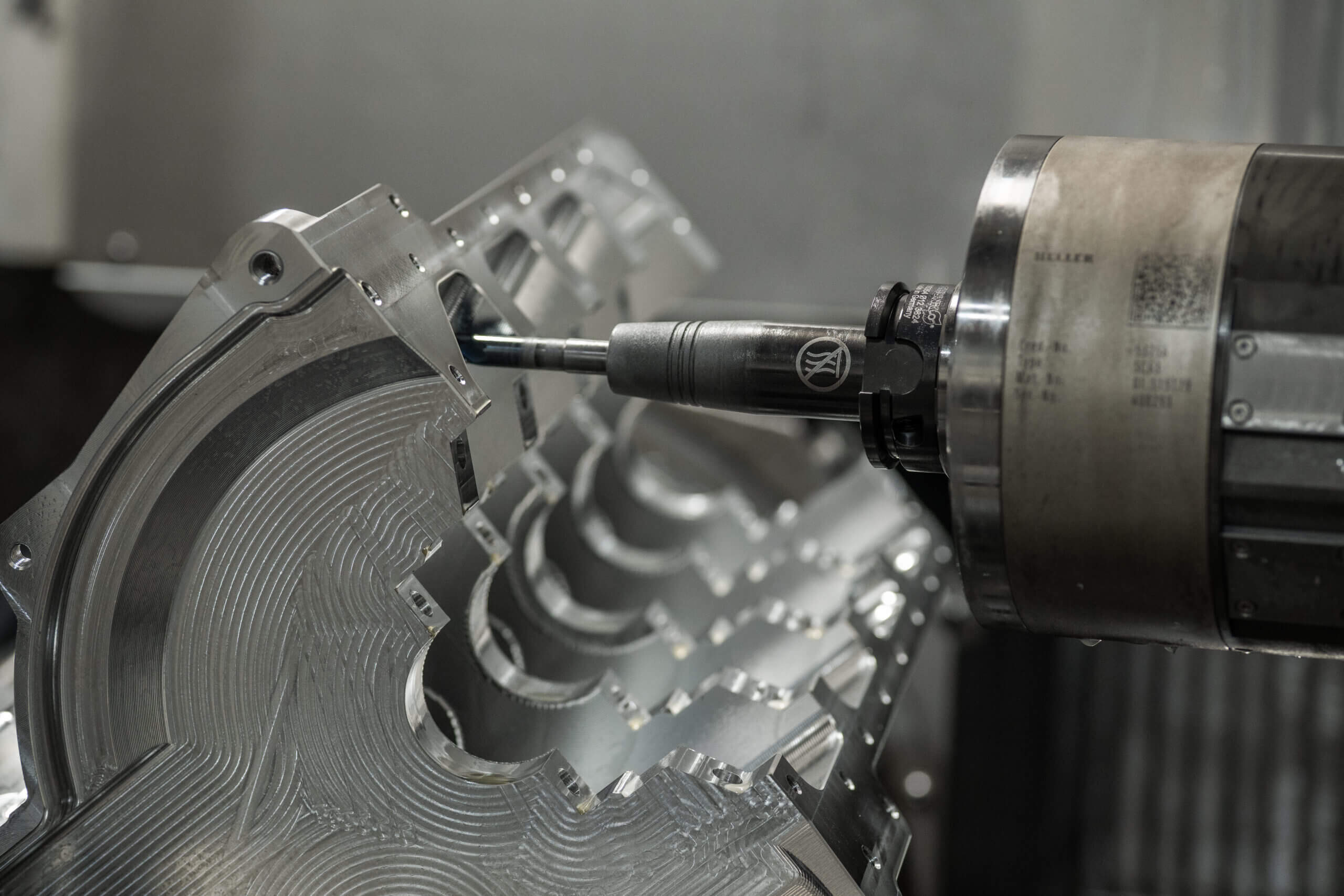
WHEN SHOULD YOU CHOOSE A 5-AXLE TRUCK INSTEAD OF A 3-AXLE ONE?
Choose 5-axis milling if your part has sloped surfaces, deep cavities, or hard-to-reach contours. Or if you have multiple surfaces in a single setup for greater dimensional accuracy. For simple, flat parts, 3-axis milling is generally less expensive.
Benefits
Complex Geometry in a Fixture
Shorter changeover time and greater accuracy.
Available for more surfaces
Including sloped surfaces and deep recesses.
Shorter turnaround time
Fewer manual intermediate steps.
Higher surface quality
Improved tool access on sloped surfaces.
In-house test chamber
Dimension check in accordance with the drawing after machining.
Frequently Asked Questions
What is 5-axis milling?
In 5-axis milling, the milling tool moves in five directions: three linear axes and two rotational axes. This allows you to achieve surfaces and contours that are unattainable with 3-axis milling.
When do I need 5-axis milling?
Choose 5-axis if your part has inclined surfaces, undercuts or multiple machining planes. It’s also recommended for high-precision requirements where repositioning is not desirable.
What is the difference between this and 3-axis milling?
3-axis motion operates in the X, Y, and Z axes. 5-axis motion adds two rotational axes. MMore design freedom.
What materials can you mill using a 5-axis milling machine?
We machine a wide range of aluminum, stainless steel, and (tool) steel. Upon request, we can also machine a wide range of other materials.
Can you perform 5-axis milling on single-piece prototypes?
Yes, we also produce prototypes and one-off items.
What file format should I submit?
STEP (.stp) or IGES is best suited for complex 3D geometry. DXF or PDF are also acceptable, but are more limited for complex shapes. We can also assist with drafting.
Need complex milling work?
Send us your STEP file. We'll assess its machinability and provide you with a quote.